
Renewable Water
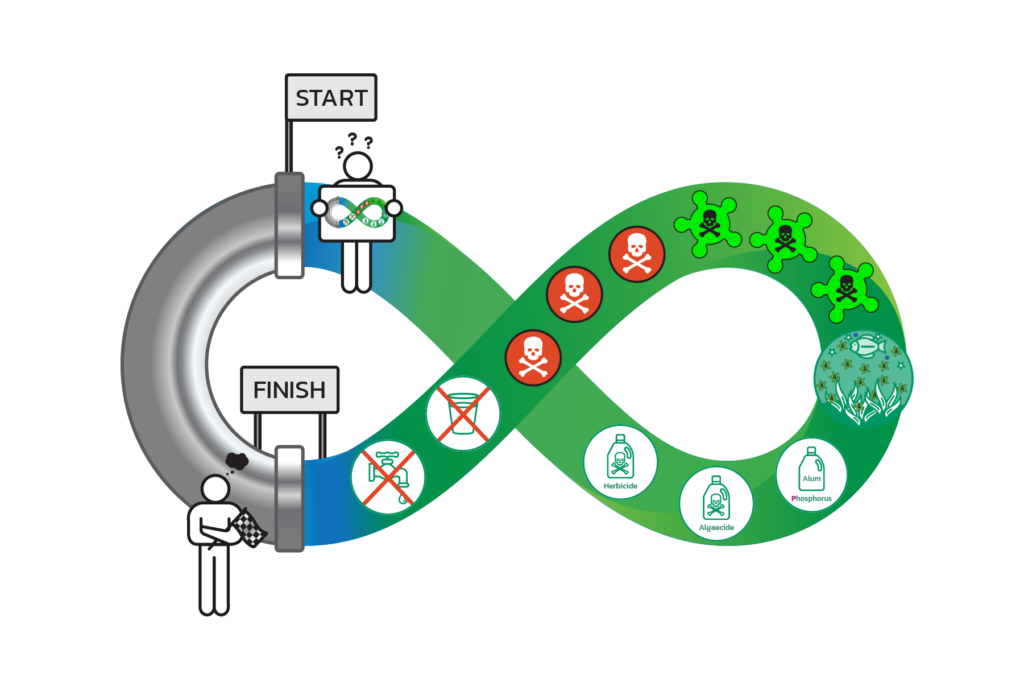
The intact blue loop represents natural water infrastructure functioning as a continuous, self-renewing cycle.

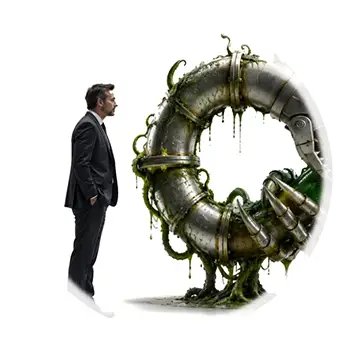
The natural water infrastructure that sustains Renewable Water is being degraded by manmade water infrastructure. This is the Paradox of Infrastructure.
For millennia, nature renewed water effortlessly, ensuring that rivers, lakes and reservoirs remained vibrant, self-sustaining ecosystems. But today, more and more of our water is unusable.
The global water crisis is about quality and reusability as well as scarcity and quantity.
The loop is more than a brand mark. It is the visual shorthand for Renewable Water: a natural cycle that can renew indefinitely — until manmade infrastructure overloads the natural infrastructure doing the real work.
The intact blue loop represents natural water infrastructure functioning as a continuous, self-renewing cycle.

The pipe shows engineered infrastructure connected to — and dependent on — the natural cycle rather than separate from it.

The shift from blue toward green signals declining ecological function as nutrient, waste and treatment burdens drive eutrophication.
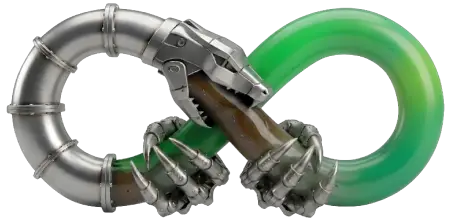
The destructive loop illustrates the paradox: adding more manmade infrastructure further degrades natural infrastructure – destroying the infinite loop of Renewable Water.
SIS.BIO treats wastewater treatment works, rivers, lakes and reservoirs as one continuous biological system. Our work spans wastewater treatment, river remediation and eutrophic lake restoration across five continents.


Built systems continue to overload the natural water infrastructure that must renew water. Symptomatic treatments can address visible signs while deepening the biological conditions that cause them.
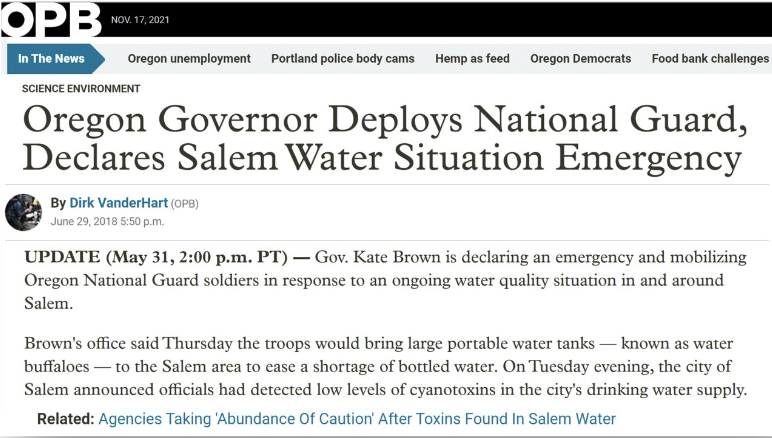
Built infrastructure depends on healthy natural water systems.

Declining source water is a planning risk.
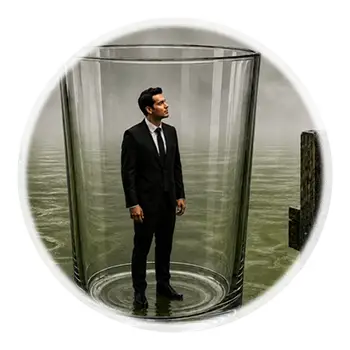
Water security depends on renewal for potable use.
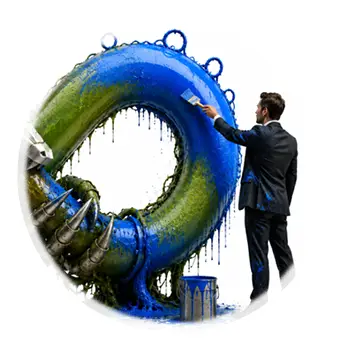
Treating symptoms can deepen biological decline.

A biological problem requires a biological solution.

Manage built and natural infrastructure as one system.
Water security requires restoring the capacity of natural water infrastructure to renew water quality repeatedly and reliably.
The destination: water continually restored to a condition suitable for potable production, without accumulating biological or chemical debt.
Applied biology to restore the oxygen, sediment, and food-web functions natural water infrastructure needs to renew water.

A framework for assessing biological condition, tracking progress, and verifying recovery.

A route from current conditions to measurable water security, for a single reservoir, a watershed, or a region.
Water security is changing in real time. A reservoir closure, a harmful algal bloom, a treatment failure, a new research finding, or a policy decision can expose a risk that conventional water management has not yet learned to see.
Perspectives on Renewable Water examines the developments shaping water policy, source-water risk, integrated water resource management, and applied biology – and tests them against the questions that matter most.
These are timely, evidence-led perspectives for the people who make water decisions. Each connects the story of the moment to the larger argument for Renewable Water – and opens a practical conversation about what credible action requires.
Follow the argument in six short chapters. Start with why the pipes and plants that deliver water depend on the rivers, lakes and reservoirs that renew it.
Chapter 01 · The Paradox of Infrastructure